


Maine grit, Amalfi grace: The luxury rebirth of the lobster boat

By Chloé Braithwaite
9 September 2026
Share


Like the lobsters they were designed to catch, the humble, hard-working lobster boat has taken a turn for the luxurious.
Until the late 19th century, the sweet, plump lobsters of Maine on the US’ New England coast were considered a most unappealing protein.
Available in abundance, the sea bugs were the fare of both prisoners and the poverty-stricken, crushed into farm fertiliser, or used as bait for more appetising seafood. But, just a few centuries later, lobsters underwent one of the most dramatic rebrands in culinary history, turning a coastal ick into a status symbol for the elite.
Much like the critters they were built to catch, the lobster boats of New England are undergoing a luxury rebirth, having caught the attention of yacht designer Francesco Guida.
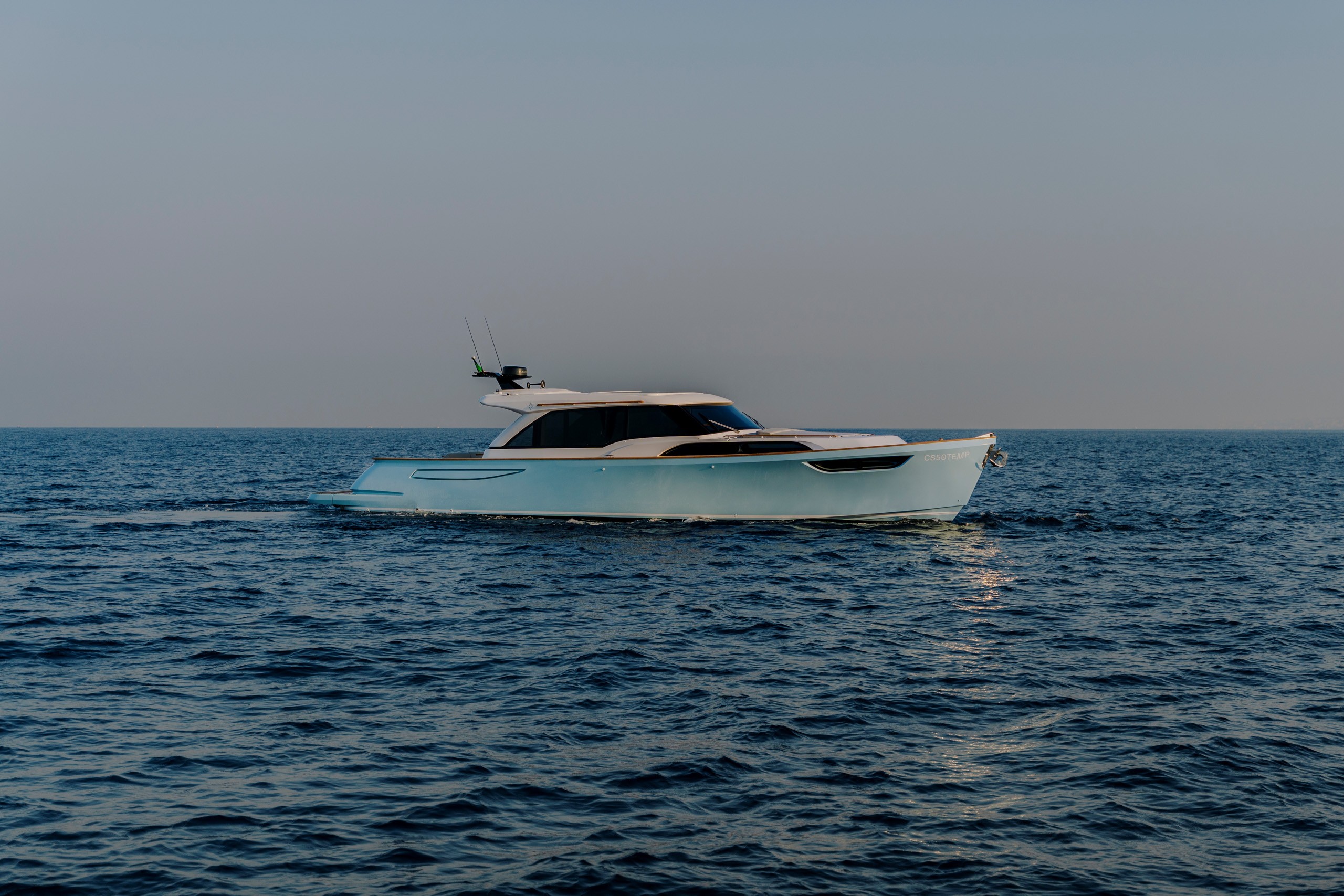
Guida took the utilitarian hull—designed for hauling hundred-pound traps in wind-battered Atlantic waters—and reinterpreted it into the AD ASTRA 60, an 18-metre day boat by Piloda Yachting. But for luxury yacht broker Alessandro Diomedi, who holds the Central Agency for the vessel, the adaptation of the humble, hard-working lobster boat is far more than just a passing exercise in design thinking.
“AD ASTRA is certainly not the first yacht to draw inspiration from the classic lobster boat,” says Alessandro. “One notable example is the traditional Sorrentine gozzo, which has become a major success story for European builders. There is something authentic about owning a yacht whose shape was originally developed to perform a real task at sea.”
Form follows function
The design is part of a broader shift towards ‘quiet luxury’ in maritime design, moving away from hyper-futuristic, over-styled hulls in favour of forms with history.
“I believe many yacht enthusiasts are attracted to designs that have genuine working roots,” Alessandro explains. “She is certainly not a yacht designed for the mass market. Personally, I have always believed that less is more, which is why I am particularly drawn to her clean, uncluttered lines and understated elegance.”
The architectural challenge was translating a vessel originally designed for cold-water survival—highly functional and utilitarian—into an open, warm-weather cruiser. Guida preserved the core hull form—a long, slender 17.86-metre length, paired with a 4.75-metre beam and that low, characteristic centre of gravity—which historically gave lobster boats their ability to slice through heavy, choppy conditions.
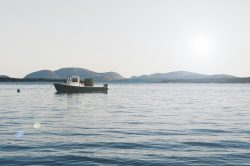
A traditional working lobster boat in Bar Harbor, Maine—the rugged utilitarian precursor to the modern AD ASTRA 60.
Reengineered for pleasure
However, the layout was reimagined for pleasure. The low-slung aft, originally kept flush so fishermen could haul heavy, waterlogged traps over the side, was repurposed into an open cockpit with sunpads, an alfresco dining area, and a hidden garage for a 2.85-metre tender.
Below deck, where working boats held little more than a single bunk, the interior accommodates six guests across three cabins; broad hull windows bring in plenty of natural light.
She reaches a top speed of 32 knots with a cruising speed of 25 knots—specs tailored for fast, single-day passages between coastal spots like Cannes or Capri.
For Alessandro, the ultimate test of the vessel’s design is found in how it shapes a day on the water.
“Imagine dropping anchor in a crystal-clear bay along the Amalfi Coast. The morning is spent swimming, paddleboarding, and enjoying the water, followed by a relaxed lunch served alfresco around the cockpit table. There is no rush, no formality, just the simple pleasure of life on the water.”
It’s the ultimate evolution, and a fitting full-circle: just as the lobster rose from cheap street food to a coastal delicacy, so too the craft designed to pursue it.
“For those that love the sea, appreciate authenticity, and know that true luxury is all about living life well, AD ASTRA 60 is the perfect companion.”
Ready to experience life on board the AD ASTRA 60? Contact Alessandro for more information.
 Previous news article